


L O A D I N G
img

SSL/TLS Certificates

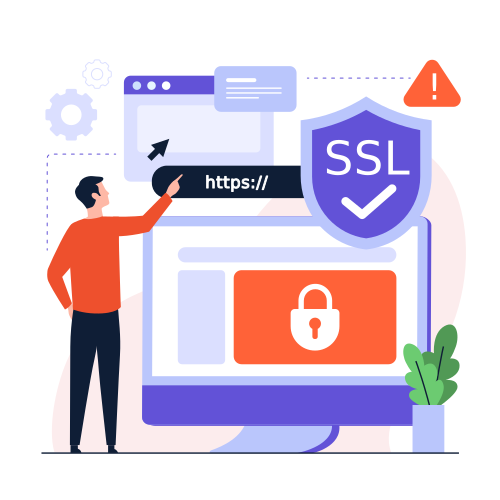
An SSL/TLS certificate is a digital file that enables encrypted communication and authenticates the identity of a website or server. It verifies the website's identity and creates a secure, encrypted connection (HTTPS) between a user's browser and the web server, protecting sensitive data like passwords and payment information from being intercepted or modified.

Read More


img

Code Signing Certificates

A code signing certificate is a digital certificate that authenticates software, scripts, and executables, proving the publisher's identity and ensuring the code hasn't been tampered with since signing, using public key cryptography (PKI). It builds user trust, reduces security warnings, and verifies the code's integrity and legitimate origin.

Read More
img

Verified Marked (VMC) Certificates

A Verified Mark Certificate (VMC) is a digital certificate proving a company legally owns its trademarked logo, allowing it to display that logo in compatible email inboxes (like Gmail) next to sender names, thanks to the BIMI standard. It enhances email security and trust by visually confirming the sender's identity.

Read More
img

Common Marked (CMC) Certificates

A Common Mark Certificate (CMC) is a digital certificate that lets businesses display their logo in email inboxes (like Gmail's) without needing a registered trademark. CMCs work with the BIMI standard to build trust and fight phishing by visually confirming an email's legitimacy through logo display.

Read More
img

Email Signing Certificates (SMIME)

An Email Signing Certificate (S/MIME) is a digital certificate that uses public-key cryptography to digitally sign and encrypt emails, proving the sender's identity and ensuring message integrity and confidentiality. It acts like a secure digital seal, preventing spoofing, tampering, and unauthorized access to sensitive communications.

Read More
img

Doc Signing Certificates

A Document Signing Certificate (DSC) is a digital credential from a trusted Certificate Authority that binds a signer's identity to an electronic document using cryptography, ensuring authenticity, integrity, and legal validity for digital transactions, protecting against tampering and enabling secure, bulk signing for businesses and individuals.

Read More
img

Certificate Management

Certificate Management is the comprehensive process of overseeing the entire lifecycle of digital certificates—from creation, deployment, monitoring, renewal, to revocation—to ensure secure, encrypted communication, prevent service outages from expiration, and maintain control over digital identities across a network, often using automation to handle the complexity.

Read More
img

Managed PKI

Managed PKI (Public Key Infrastructure) is a service where a third-party provider handles the complex setup, operation, and maintenance of an organization's digital certificate management, offering a streamlined, often cloud-based way to issue, renew, and revoke digital IDs for users, devices, and applications, reducing internal burden and ensuring security.

Read More
img

Backup solution

A backup solution is a system (software + hardware/cloud) that automatically copies data from its primary location to a secure, secondary location to protect it from loss due to hardware failure, cyberattacks, disasters, or human error, allowing for quick restoration to maintain business continuity and personal data safety.

Read More
img

Zero Trust

Zero Trust is technology that implements the "never trust, always verify" principle by breaking networks into tiny segments to stop breaches, especially ransomware, from spreading laterally. Platform offers visibility into application traffic, allowing teams to define and enforce granular security policies that control communication between workloads, devices, and users.

Read More
img

DMARC

DMARC is an enterprise-grade email security and authentication platform designed to protect your domain from phishing, spoofing, and email fraud. It helps organizations implement, monitor, and enforce DMARC, SPF, and DKIM with complete visibility and control.

Read More

Frequently Asked Questions

Find answers to common questions about our cybersecurity services, PKI management, and support.

Public Key Infrastructure (PKI) is a framework of hardware, software, policies, and standards used to manage digital certificates and public-key encryption. It enables secure communication, authentication, and data integrity across networks by using pairs of public and private cryptographic keys.

SSL/TLS encryption uses asymmetric cryptography to establish a secure connection between a client and server. When you visit an HTTPS site, your browser and the server perform an SSL/TLS handshake to exchange certificates and create an encrypted session, protecting data from interception.

Zero Trust is a security model that assumes no user or device should be trusted by default. It requires continuous verification of every access request, implementing microsegmentation, least-privilege access, and strict identity controls to prevent lateral movement by attackers.

Security certificates should typically be renewed before expiration, usually annually for standard certificates. However, automated certificate management systems can handle renewals 30-60 days before expiry to prevent service disruptions.

Code signing certificates authenticate software publishers and verify code integrity, while document signing certificates validate the identity of document signers and ensure documents haven't been tampered with. Both use public key cryptography but serve different purposes.

Protection against ransomware includes: regular data backups, email filtering, employee training, network segmentation, endpoint detection systems, and keeping software updated. A comprehensive backup strategy with offline copies is crucial for recovery.

DMARC (Domain-based Message Authentication, Reporting & Conformance) is an email authentication protocol that works with SPF and DKIM to prevent email spoofing and phishing attacks. It helps protect brand reputation and improves email deliverability.

IT Engineers Services provides comprehensive cybersecurity solutions including: PKI Solutions, Application Security, Identification & Authentication, Zero Trust implementation, Backup Solutions, DMARC configuration, Certificate Management, and Managed PKI services.